June 26th, 2019
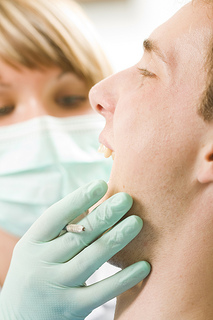
Oral cancer is largely viewed as a disease that affects those over the age of 40, but it can affect all ages, even non-tobacco and alcohol users. Oral cancer can occur on the lips, gums, tongue, inside lining of the cheeks, roof of the mouth, and the floor of the mouth. Our team at Highland Family Dental recently put together some facts and figures to illustrate the importance of visiting our Plaistow, New Hampshire office.
Our friends at the American Cancer Society recommend an oral cancer screening exam every three years for people over the age of 20 and annually for those over age 40. Because early detection can improve the chance of successful treatment, be sure to ask Melissa Newman and our team to conduct an oral exam during your next visit to our Plaistow, New Hampshire office.
- Symptoms of oral cancer may include a sore in the throat or mouth that bleeds easily and does not heal, a red or white patch that persists, a lump or thickening, ear pain, a neck mass, or coughing up blood. Difficulties in chewing, swallowing, or moving the tongue or jaws are often late symptoms.
- The primary risk factors for oral cancer in American men and women are tobacco (including smokeless tobacco) and alcohol use. Risk rises dramatically (30%) for people who both smoke and consume alcohol regularly.
- Oral cancers are part of a group of cancers commonly referred to as head and neck cancers, and of all head and neck cancers they comprise about 85% of that category.
- Oral cancer is the sixth most common cancer among men.
- Oral cancer is more likely to affect people over 40 years of age, though an increasing number of young people are developing the condition.
- Death rates have been decreasing over the past three decades; from 2004 to 2008, rates decreased by 1.2% per year in men and by 2.2% per year in women, according to the American Cancer Society.
- About 75% to 80% of people with oral cavity and pharynx cancer consume alcohol.
- The risk of developing oral cavity and pharynx cancers increases both with the amount as well as the length of time tobacco and alcohol products are used.
- For all stages combined, about 84% of people with oral cancer survive one year after diagnosis. The five- and ten-year relative survival rates are 61% and 50%, respectively.
- It is estimated that approximately $3.2 billion is spent in the United States annually on treatment of head and neck cancers.
Cancer can affect any part of the oral cavity, including the lip, tongue, mouth, and throat. Through visual inspection, Melissa Newman and our team at Highland Family Dental can often detect premalignant abnormalities and cancer at an early stage, when treatment is both less extensive and more successful.
Please let us now if you have any questions about your oral health either during your next scheduled appointment, by giving us a call or asking us on Facebook.
June 19th, 2019

Water picks, sometimes called “oral irrigators,” make an excellent addition to your regular home care regimen of brushing and flossing. Especially helpful to those who suffer from periodontal disease and those patients of ours undergoing orthodontic treatment with full-bracketed braces, water picks use powerful tiny bursts of water to dislodge food scraps, bacteria, and other debris nestled in the crevices of your mouth. Children undergoing orthodontic treatment may find using a water pick is beneficial if their toothbrush bristles tend to get caught on their wires or brackets.
When you use a water pick, you’re not only dislodging any particles or debris and bacteria you might have missed when brushing, you are also gently massaging the gums, which helps promote blood flow in the gums and keeps them healthy. While water picks are an excellent addition to your daily fight against gingivitis and other periodontal diseases, they are incapable of fully removing plaque, which is why Melissa Newman and our team at Highland Family Dental want to remind you to keep brushing and flossing every day.
If you have sensitive teeth or gums and find it uncomfortable to floss daily, water picks are a good alternative to reduce discomfort while effectively cleaning between teeth. Diabetics sometimes prefer water picks to flossing because they don't cause bleeding of the gums, which can be a problem with floss. If you have a permanent bridge, crowns, or other dental restoration, you may find that a water pick helps you keep the area around the restorations clean.
So how do you choose the right water pick?
Water picks are available for home or portable use. The home versions tend to be larger and use standard electrical outlets, while portable models use batteries. Aside from the size difference, they work in the same manner, both using pulsating water streams. A more crucial difference between water picks is the ability to adjust the pressure. Most home models will let you choose from several pressure settings, depending on how sensitive your teeth and gums are. Most portable models have only one pressure setting. If you want to use mouthwash or a dental rinse in your water pick, check the label first; some models suggest using water only.
Please give us a call at our Plaistow, New Hampshire office if you have any questions about water picks, or ask Melissa Newman during your next visit!
June 12th, 2019

Sometimes cavities are hard to avoid. Our team at Highland Family Dental wants you to know you aren’t alone when it comes to getting cavities. They can appear in both children and adults, and in order to avoid the pain and hassle, you need to understand how they form and what to do to prevent them from developing in the first place.
Cavities form when bacteria, acids, or sugars build up and form plaque on your teeth, which can destroy your enamel. When you don’t brush and floss properly, the build-up can cause cavities to form. In essence, a cavity is a decayed part of your tooth that cannot be repaired by your body’s immune system. This is why a dentist will need to treat your cavity with a filling. If it grows for too long and manages to infect the root of your tooth, a root canal may be the only solution.
Cavities are often symptom-free; you might not experience any pain at first, other than the occasional irritation when you drink a hot or cold beverage. Other signs of possible cavities include persistent bad breath, pus or discharge around a tooth, black or brown discoloration, small pits or holes in a tooth, and perhaps a sticky feeling when you bite down. It’s crucial to treat cavities sooner rather than later if you wish to avoid excessive pain and the necessity of a root canal.
You can avoid cavities by keeping up with good oral hygiene, eating a well-balanced diet, and scheduling regular cleanings with Melissa Newman. They can still occur at any time, no matter what age you are, so make sure to brush, floss, and rinse every day. If you notice any of the above symptoms, please contact our Plaistow, New Hampshire office and schedule an appointment.
June 5th, 2019

The community health awareness group Oral Health America has reported that 82 percent of adults are unaware of the role that infectious bacteria can play in tooth decay or cavities, and almost three out of five children aged 12 to 19 have tooth decay. Since June is National Smile Month, Melissa Newman and our team at Highland Family Dental thought we’d remind our patients about the importance of good oral hygiene visits between office visits.
To keep your family’s smiles healthy and beautiful for years to come, be sure to:
- Brush at least twice a day with fluoride toothpaste
- Floss every day to clean between your teeth
- Eat a healthy, well-balanced diet
- Reduce your intake of sugary foods and drinks
- Visit Melissa Newman for scheduled appointments
If you want to know more about healthy home care habits, feel free to ask our team at your next appointment, or ask us on Facebook!